Frederick Richardson's Book for Children by Frederick Richardson
![[Illustration]](http://www.gatewaytotheclassics.com/gold/books/richardson/children/richardson_children_091.gif)
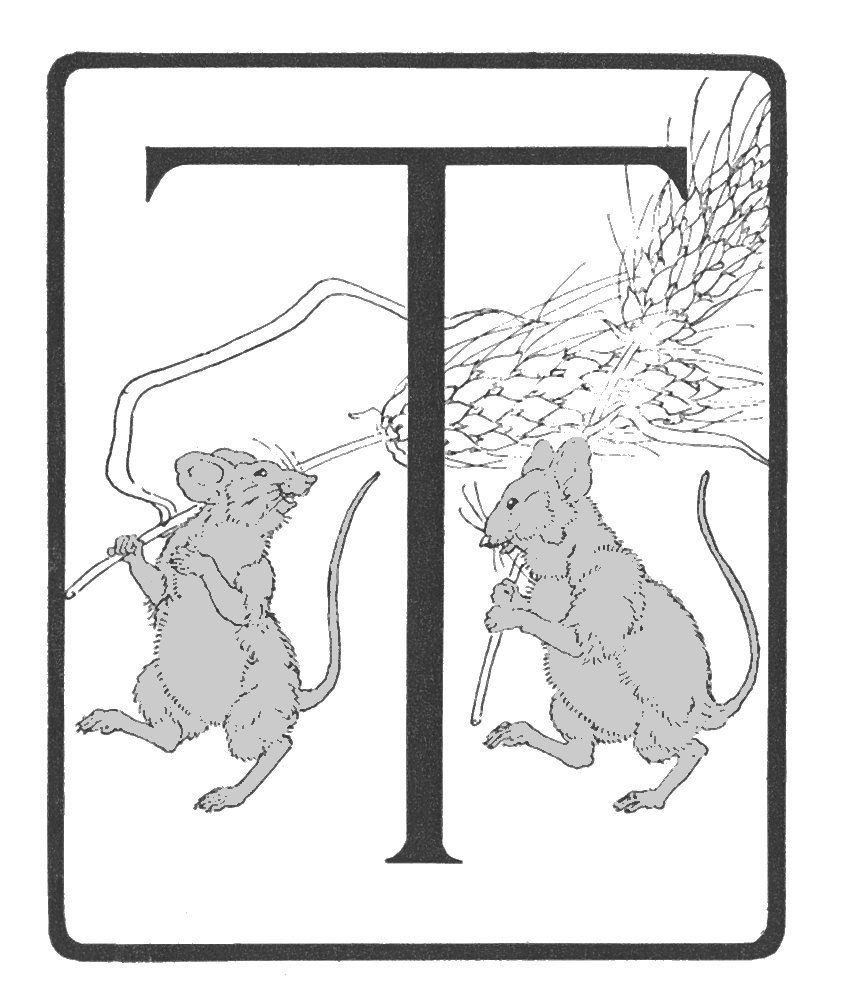 ITTY Mouse and Tatty Mouse both lived in a house.
Titty Mouse went a-leasing, to gather up the fallen
ears of corn, and Tatty Mouse went a-leasing.
So they both went a-leasing.
Titty Mouse leased an ear
of corn, and Tatty Mouse leased an ear of corn.
So they
both leased an ear of corn.
Titty Mouse made a pudding, and Tatty Mouse made a
pudding.
So they both made a pudding.
And Tatty Mouse put her pudding into the pot to boil.
![[Illustration]](http://www.gatewaytotheclassics.com/gold/books/richardson/children/richardson_children_092.gif)
But when Titty went to put hers in, the pot tumbled
over and scalded her to death.
Then Tatty sat down and
wept; then a three-legged stool said:
"Tatty, why do you weep?"
"Titty's dead," said Tatty, "and so I weep."
"Then," said the stool, "I'll hop," so the stool
hopped.
Then a broom in the corner of the room said:
"Stool, why do you hop?"
"Oh!" said the stool, "Titty's
dead, and Tatty weeps, and so I hop."
"Then," said the
broom, "I'll sweep," so the broom began to sweep.
"Then," said the door, "Broom, why do you sweep?"
"Oh!" said the broom, "Titty's dead, and Tatty weeps, and
the stool hops, and so I sweep."
![[Illustration]](http://www.gatewaytotheclassics.com/gold/books/richardson/children/richardson_children_093.gif)
"Then," said the door,
"I'll jar," so the door jarred.
"Then," said the window, "Door, why do you jar?"
"Oh!" said the door, "Titty's dead, and Tatty weeps, and the
stool hops, and the broom sweeps, and so I jar."
"Then," said the window, "I'll creak," so the window
creaked.
Now there was an old bench outside the house, and when
the window creaked, the bench said: "Window, why do you
creak?"
"Oh!" said the window, "Titty's dead, and Tatty
weeps, and the stool hops, and the broom sweeps, the
door jars, and so I creak."
"Then," said the bench, "I'll run round the house."
Then the old bench ran round the house.
![[Illustration]](http://www.gatewaytotheclassics.com/gold/books/richardson/children/richardson_children_094.gif)
Now there was a fine large walnut-tree growing by the
cottage, and the tree said to the bench: "Bench, why do
you run round the house?"
![[Illustration]](http://www.gatewaytotheclassics.com/gold/books/richardson/children/richardson_children_096.gif)
"Oh!" said the bench,
"Titty's dead, and Tatty weeps, and the stool hops, and
the broom sweeps, the door jars, and the window creaks,
and so I run round the house."
"Then," said the walnut-tree, "I'll shed my leaves."
So the walnut-tree shed all its beautiful green leaves.
Now there was a little bird perched on one of the
boughs of the tree, and when all the leaves fell, it
said: "Walnut-tree, why do you shed your leaves?"
"Oh!" said the tree, "Titty's dead, and Tatty weeps, the
stool hops, and the broom sweeps, the door jars, and
the window creaks, the old bench runs round the house,
and so I shed my leaves."
"Then," said the little bird, "I'll moult all my
feathers," so he moulted all his pretty feathers.
Now there was a little girl walking below, carrying a jug
of milk for her brothers' and sisters' supper, and when
she saw the poor little bird moult all its feathers,
she said: "Little bird, why do you moult all your
feathers?"
![[Illustration]](http://www.gatewaytotheclassics.com/gold/books/richardson/children/richardson_children_097.gif)
"Oh!" said the little bird, "Titty's dead,
and Tatty weeps, and the
stool hops, and the broom sweeps, and the door jars,
and the window creaks, and the old bench runs round
the house, the walnut-tree sheds its leaves, and so I
moult all my feathers."
"Then," said the little girl, "I'll spill the milk," so
she dropt the pitcher and spilt the milk.
![[Illustration]](http://www.gatewaytotheclassics.com/gold/books/richardson/children/richardson_children_095.jpg)
Now there was an old man just by on the top of a ladder
thatching a rick, and when he saw the little girl
spill the milk, he said: "Little girl, what do you mean
by spilling the milk? Your little brothers and sisters
must go without their supper."
Then said the little girl: "Titty's dead, and Tatty
weeps, and the stool hops, and the broom sweeps, the
door jars, and the window creaks, the old bench runs
round the house, the walnut-tree sheds all its leaves,
the little bird moults all its feathers, and so I spill
the milk."
"Oh!" said the old man, "then I'll tumble off the
ladder and break my neck," so he tumbled off
the ladder and broke his neck.
When the old man broke his neck, the great walnut-tree
fell down with a crash, and upset the
old bench and house, and the house falling knocked the
window out, and the window knocked the door down, and the
door upset the broom, and the broom upset the stool,
and poor little Tatty
Mouse was buried beneath the ruins.
|